
Blog
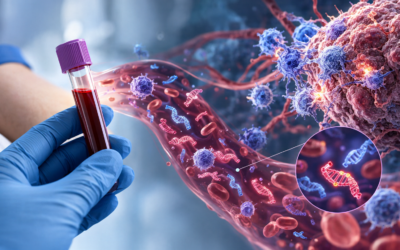
Can a single blood draw tell us whether a tumor responds to immunotherapy?
Immunotherapy is now an established treatment option for patients with metastatic lung cancer. However, when a patient starts immunotherapy, everyone anticipates an answer to a single question. Is the treatment effective? This question is typically addressed with a CT...
The Impostor Variants: Machine Learning Unmasks Clonal-Hematopoiesis Mutations in Liquid Biopsies
The clinical challenge Liquid biopsies have undoubtedly reshaped precision oncology. A simple blood draw can now reveal the molecular blueprint of a patient's cancer, and this information can be subsequently used to guide treatment decisions. Actionable mutations,...

PlasmaCHORD, a novel machine learning model, distinguishes tumor-derived from clonal hematopoiesis-derived mutations in liquid biopsies routinely used in clinical cancer care
Precision oncology is increasingly driven by next-generation sequencing (NGS) technologies, advanced techniques that allow for parallel sequencing of millions of nucleic acid fragments. These technologies have enabled comprehensive genomic profiling of tumor tissue...

ctDNA residual disease may provide a molecular green light for perioperative immunotherapy in individuals with resectable mesothelioma.
Diffuse pleural mesothelioma remains a uniquely challenging malignancy. Its growth pattern undermines conventional imaging, its biology yields scant circulating tumor signal, and debate exists around the value and timing of surgery. Against this backdrop, we asked two...

Addressing Challenges in the Integration of Precision Oncology through Advances in Technology and Education
Precision oncology has fundamentally reshaped the treatment paradigm within the field, with individualized biomarker-matched therapies enhancing the arsenal oncologists use to manage cancer. For the evolving ecosystem of precision oncology to advance toward a...

Can radiation help activate the immune system to fight cancer? How radioimmunotherapy affects immune response in patients with non-small cell lung cancer.
Over the past decade, significant progress has been achieved in treating lung cancer, particularly for individuals with non-small cell lung cancer (NSCLC). In particular, the development of immune checkpoint inhibitors – which harness a patient’s immune system to...

The revolutionary role of immunotherapy in the treatment of cancer
Significant advancements have been made in the therapeutic landscape of cancer, driven by the imperative to develop treatments for patients that are both effective and less toxic. Traditional therapeutic strategies like surgery, chemotherapy, and radiation therapy are...

Of Context, Quality, and Complexity: Fine-combing Tumor Mutational Burden in Immunotherapy-Treated Cancers
Immunotherapy, in the form of immune checkpoint inhibition (ICI), has transformed cancer care across multiple tumor types. However, existing biomarkers often fail to accurately predict which patients will draw maximal benefit. Tumor Mutation Burden (TMB) has emerged...

Cancer evolution converging on common resistance mechanisms to PARP inhibition: A Molecular Tumor Board discussion.
Precision oncology is revolutionizing the way we treat cancer by tailoring therapies to the genetic makeup of individual tumors. As our understanding of cancer's molecular biology continues to expand, therapies are becoming more targeted, effective, and...